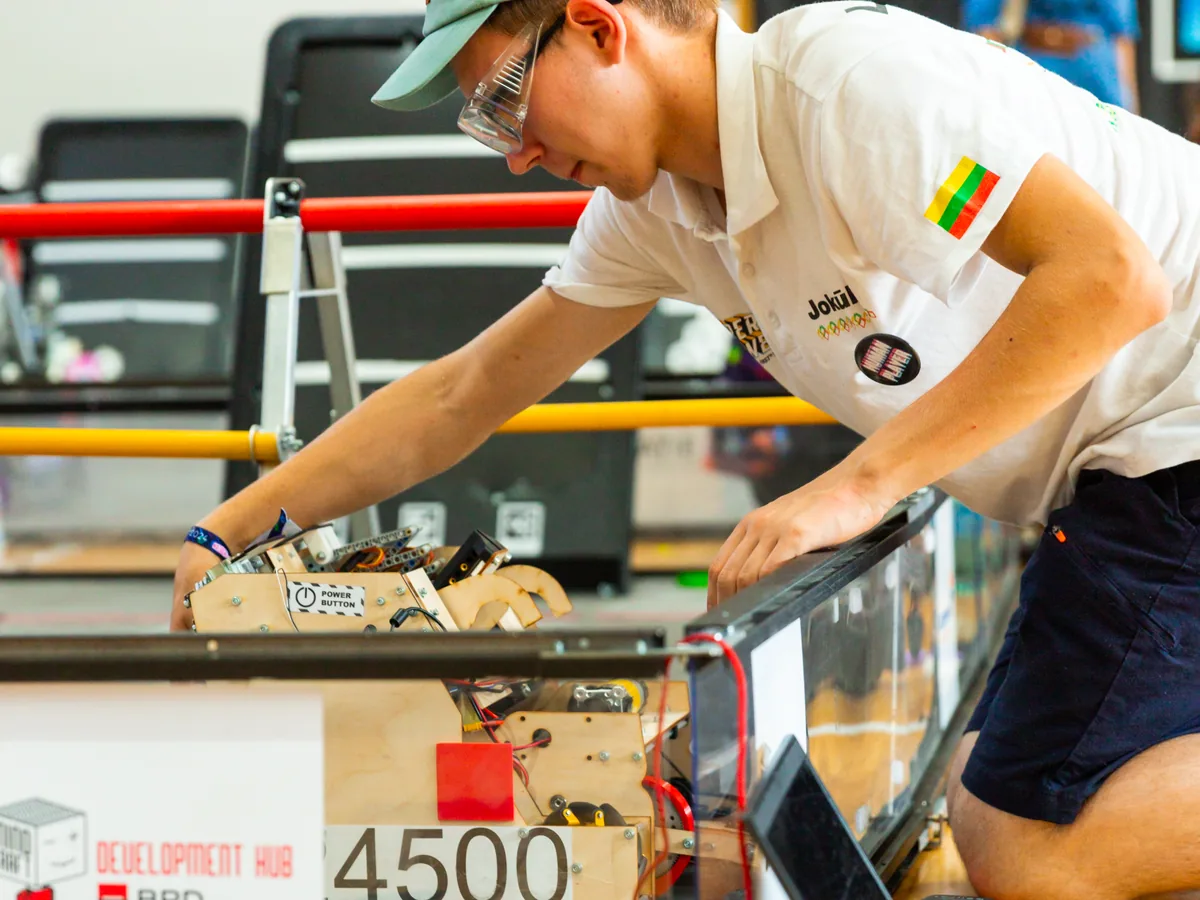
Centerstage BTC robot
The third robot of the season, built to compete among the world's best at the last competition of the year.
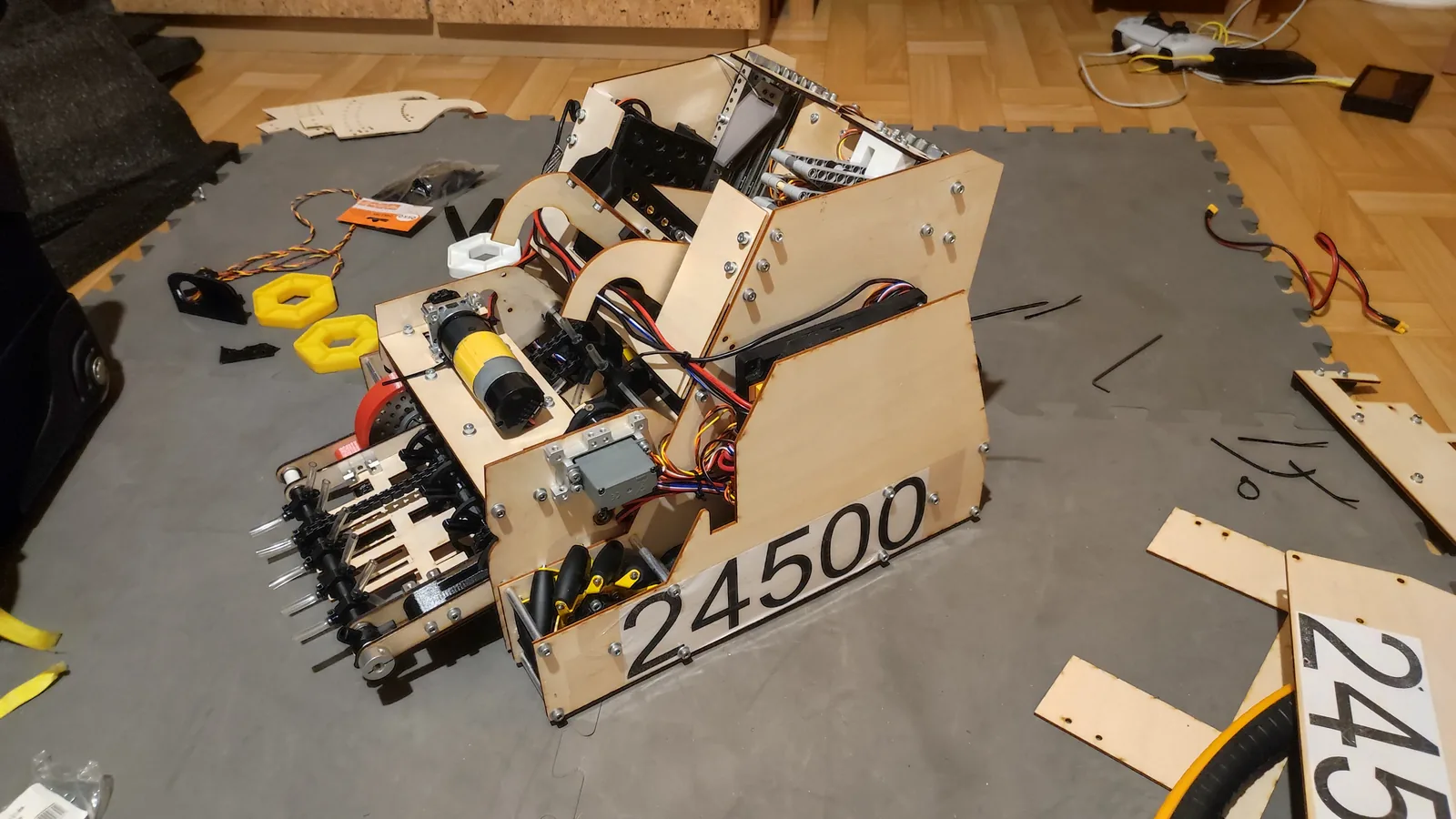
The problem
The robot was built for the FIRST Centerstage season, where robots pick hexagonal pieces called PIXELS off the floor and score by placing them on the backdrop. Points also come from climbing the structural trusses at the end of the match, and from launching a paper airplane that has to land inside a designated area.
What I designed
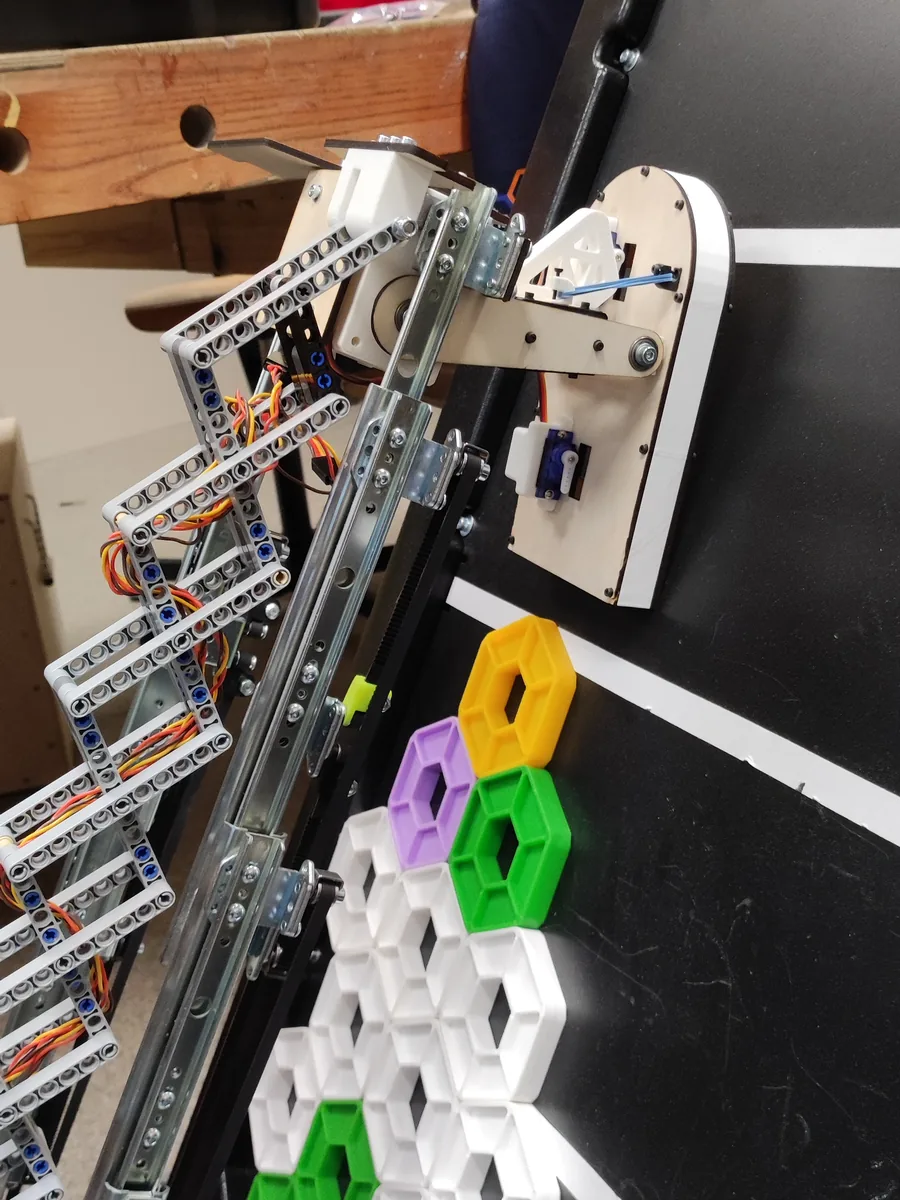
An adaptive outtake basket that self-adapts to place PIXELS on the backdrop, giving around 10 cm of flexibility. This reduced the precision required from the driver, made cycles faster, and reduced the likelihood of knocking PIXELS off the backdrop.
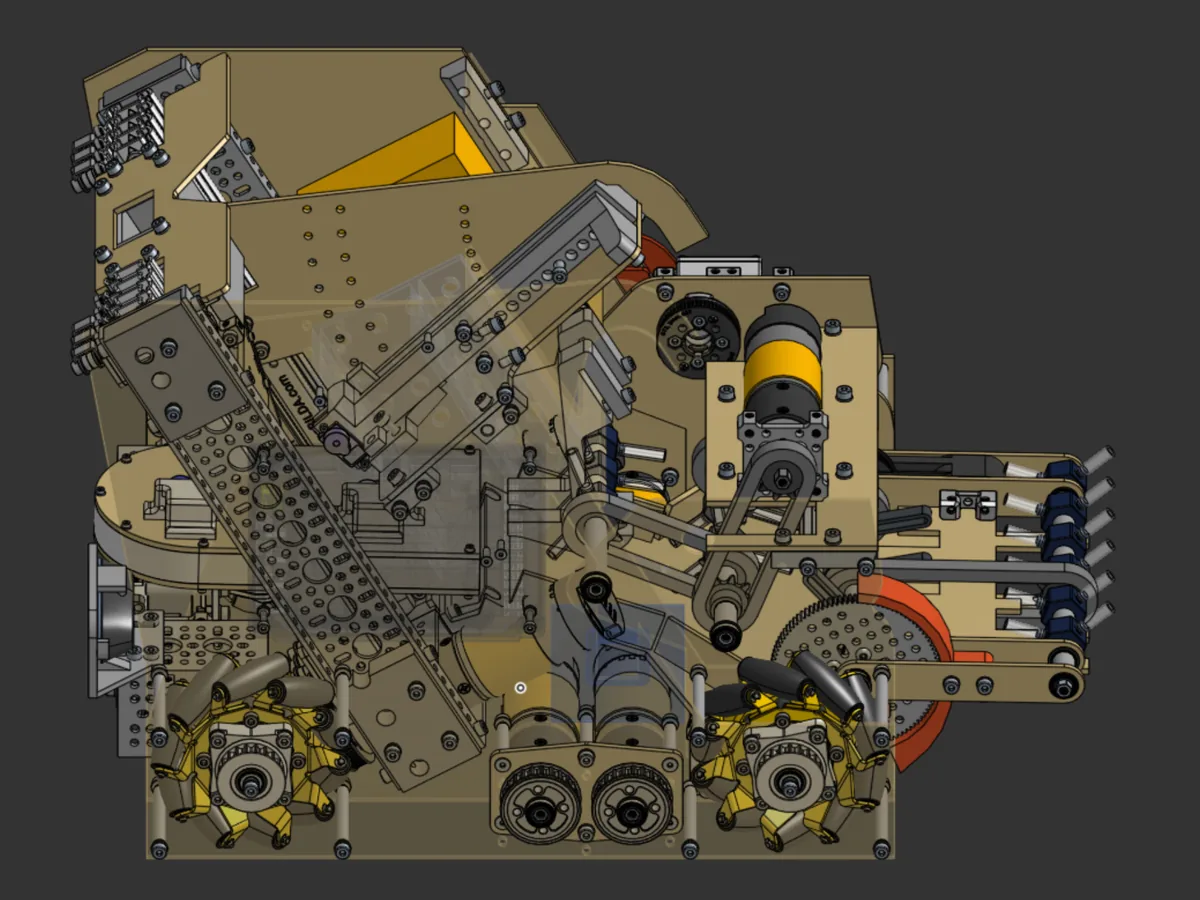
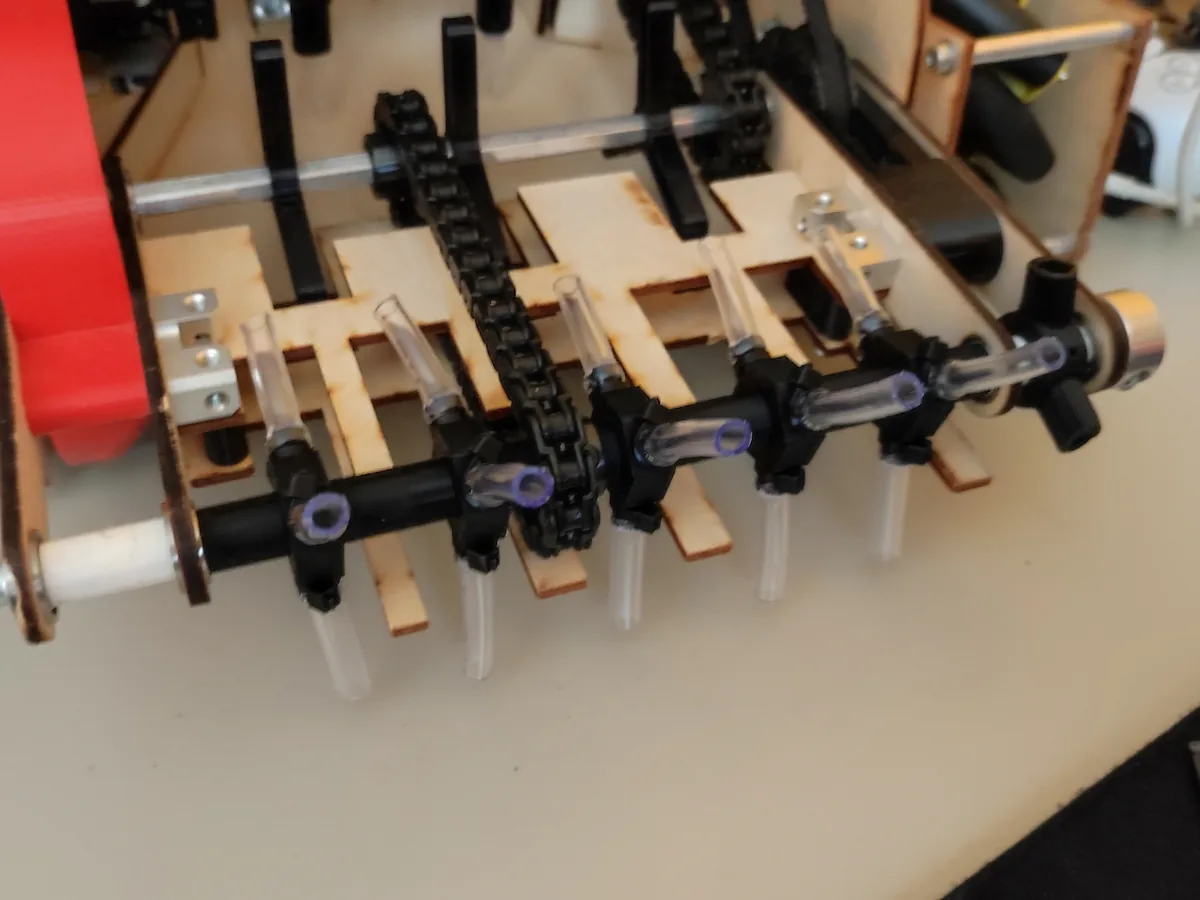
A pivoting intake with flexible surgical tubing brushes that could extend about 10 cm outside the robot's frame. That reach let it pick PIXELS out of corners, alongside the truss, and from the five-PIXEL pre-set stacks, all places a static intake inside the frame would struggle to reach.
Pull-up hooks mounted on the goBILDA Viper slides scored the 20 ascent points in under two seconds from activation. They doubled as the mounting base for the paper airplane launcher, which was integrated between them so the slides could lift it for the best shooting trajectory, and connecting the hooks together made the whole assembly sturdier.
How it was made
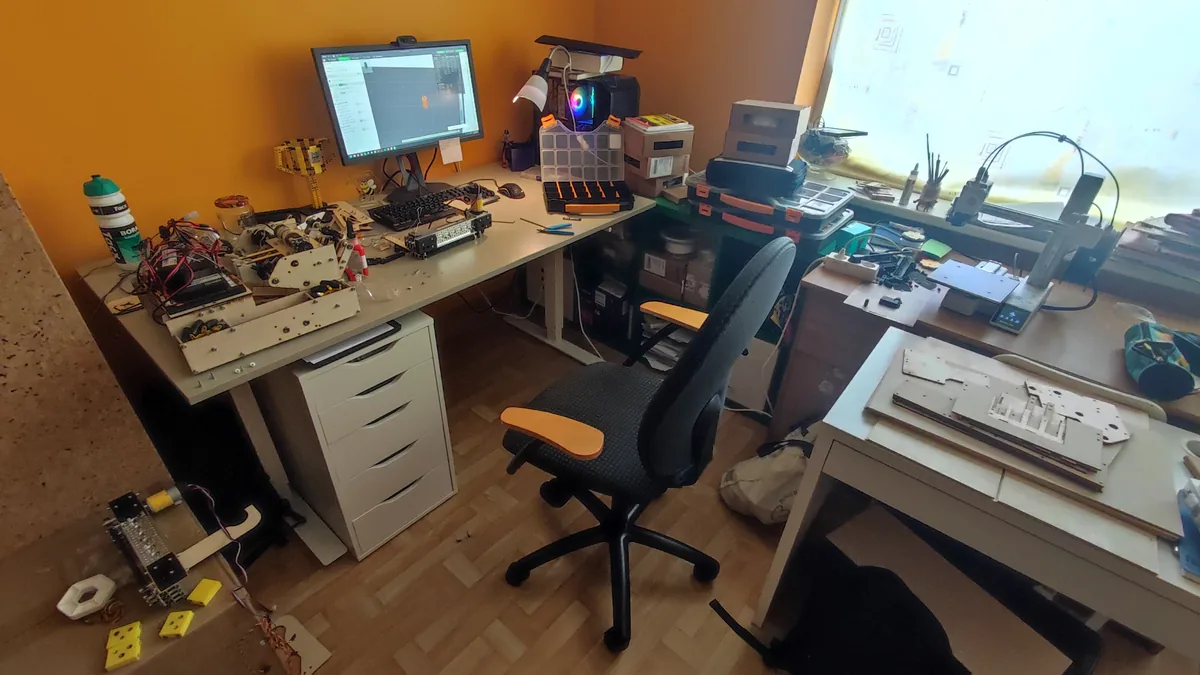
This was the first FTC robot built without access to our school's workshop, which was closed for the summer. The side plates are plywood, laser-cut at KTU's Circular Makerspace, and the majority of mounts, adapters and brush mountings were 3D printed in PLA and ABS. Motors and the control system had to be bought from official suppliers; the mecanum wheels and slides were bought because they needed high reliability over many use cycles, and development time was limited.
What was the hardest part to develop
The hardest component was the intake-to-transfer convergence point, where PIXELS go from an area as wide as the robot to a basket entrance just 90 mm wide. There the PIXELS jammed sideways, pushed each other into the wall, or jumped one on top of another.
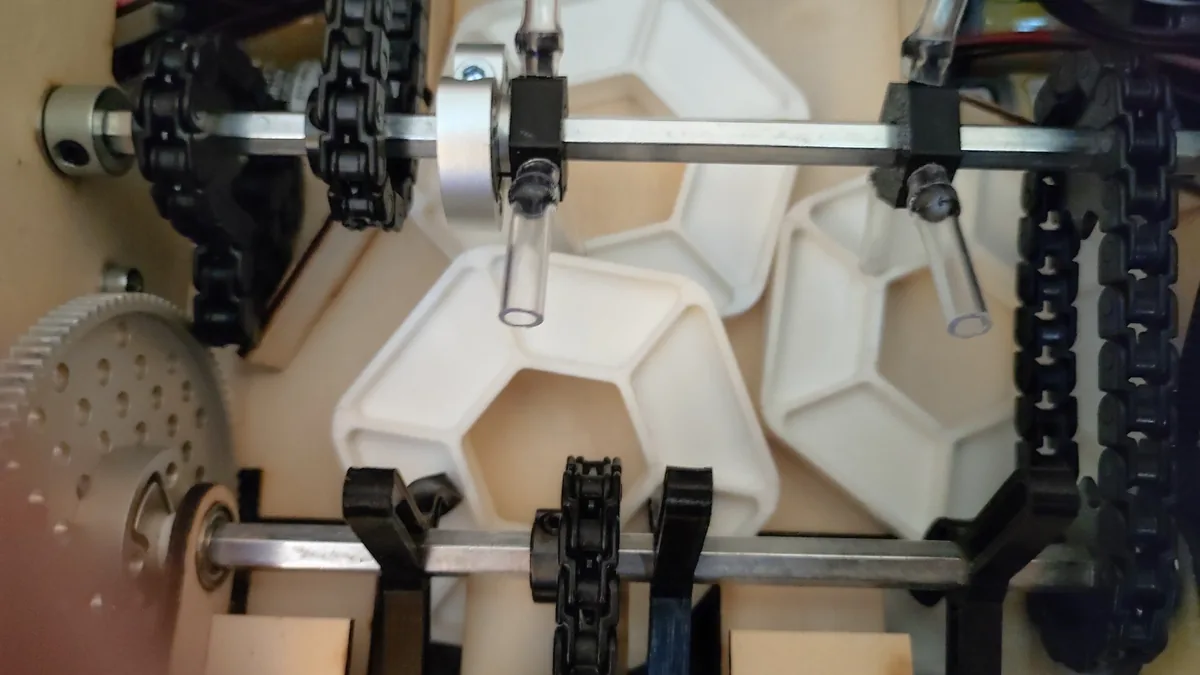
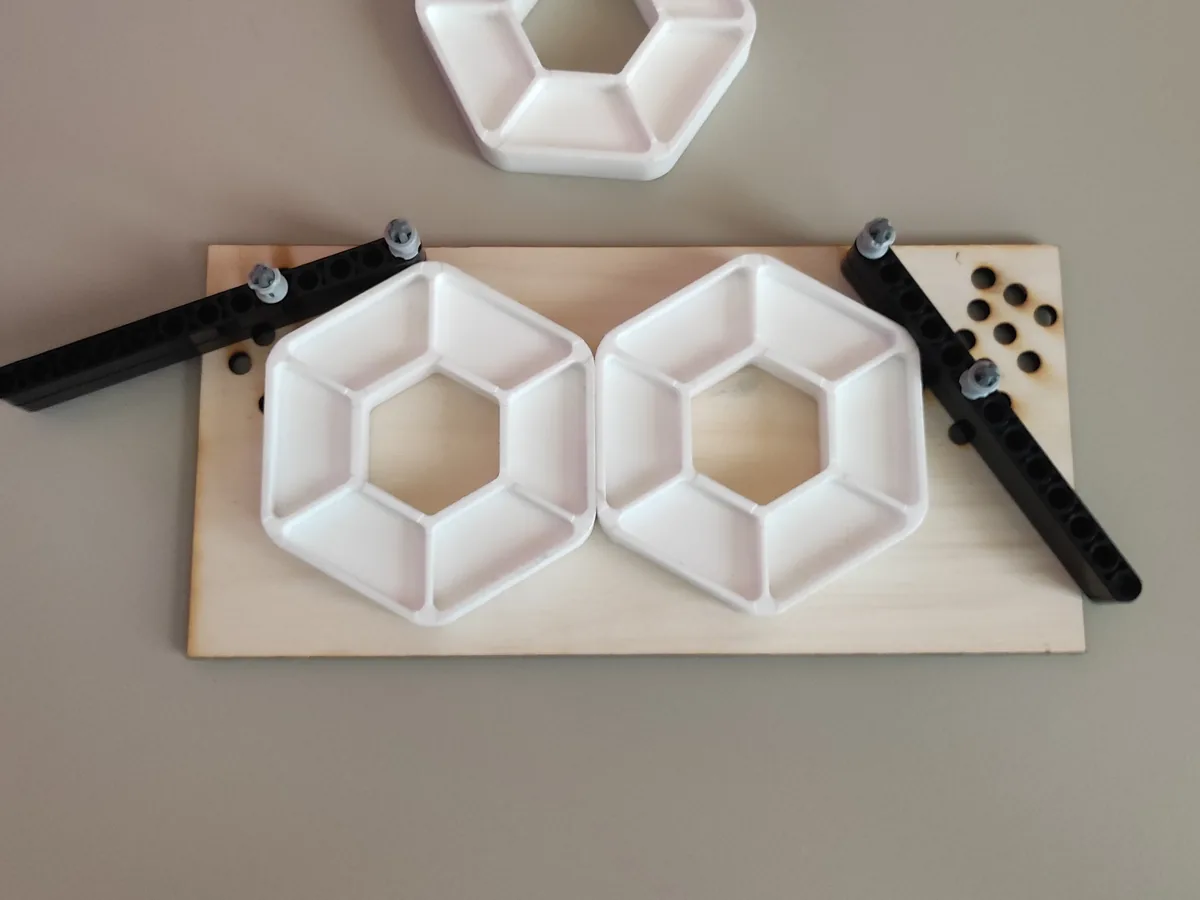
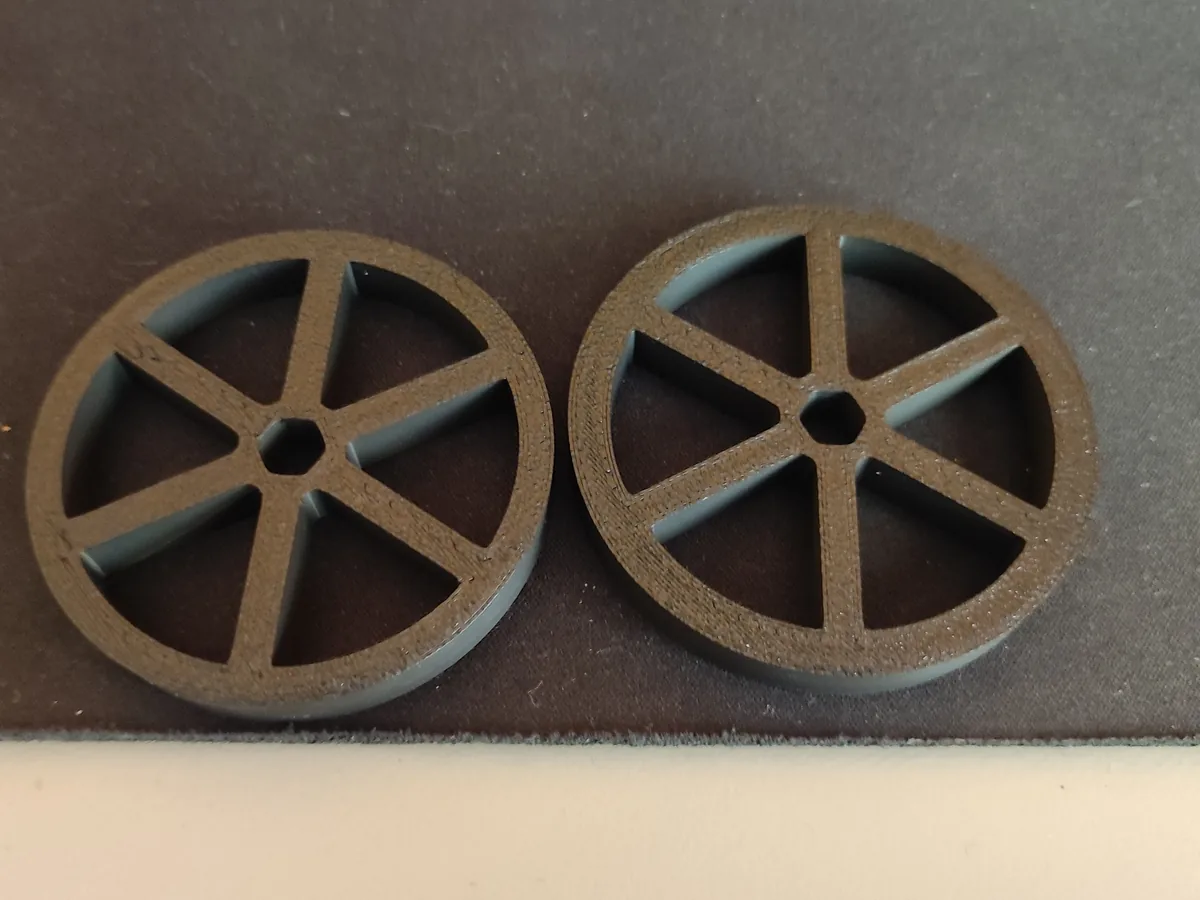
To solve it I designed a custom testing bench with adjustable walls, which let me tune the angles a few degrees at a time until one of the PIXELS would always slide, pushing the other out of its path. For the jumping, discs on the transfer shafts reduced vertical play to under 3 mm, so a PIXEL could no longer climb over its neighbour.
What went wrong
We did not account for field tolerances. At home the autonomous period worked perfectly; at the competition we had consistency issues, especially on the later cycles, because the robot's position slowly drifted and we had no way to recalibrate it.
Result
We did not win. We were not second, or third. We were not last either: 10th of 17 alliances. Against a team with five years of experience to our one, holding the world number one ranking and every championship it had entered that season, we put up 258 points to their 306.